Home · Devotions · Divine Mercy
Feast: October 5
Apostle of Divine Mercy
A simple Polish nun with little schooling, to whom Jesus entrusted a great mission: to make His mercy known to the whole world. Discover her life and her visions, and download her Diary for free.
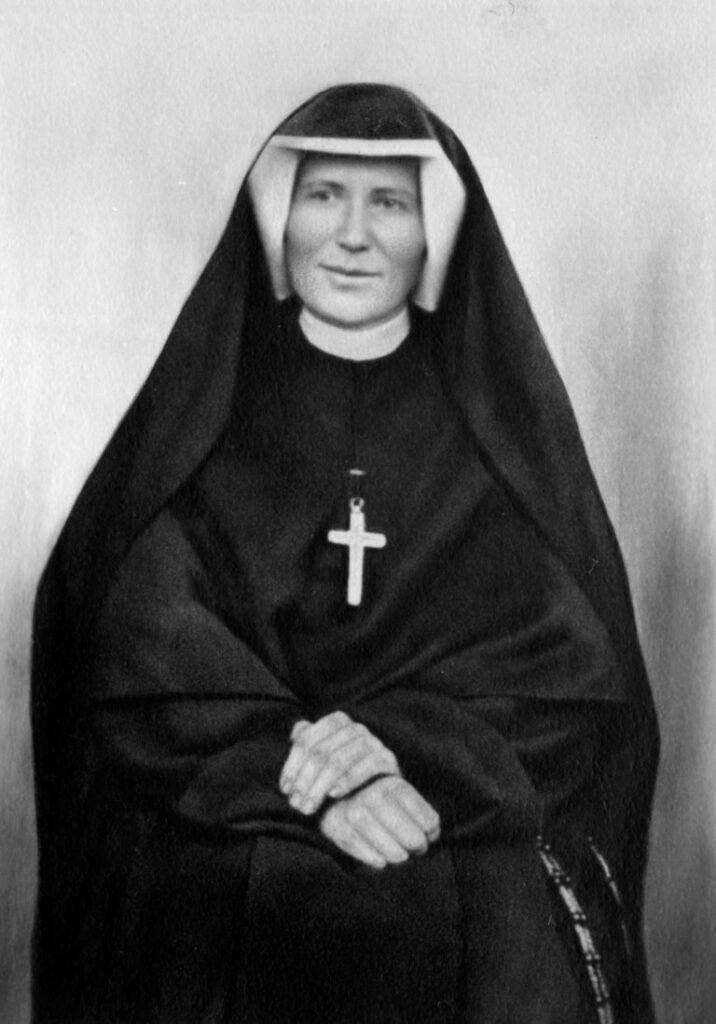
Original photograph, before 1938
“Today I am sending you with My mercy to the people of the whole world. I do not want to punish aching mankind, but I desire to heal it, pressing it to My Merciful Heart.”
Jesus to Saint Faustina · Diary 1588
1905 – 1938
Helen Kowalska was born into a devout peasant family. From the age of seven she felt in her soul the call to religious life, but her parents did not give their permission. She worked as a housemaid until, after a vision of the suffering Jesus, she left for Warsaw and knocked on the doors of several convents.
In the Congregation of the Sisters of Our Lady of Mercy she worked as a cook, gardener and portress in Kraków, Płock and Vilnius. Nothing on the outside suggested her extraordinary mystical life: she fulfilled her duties with fervor and was joyful, simple and full of love for her neighbor.
She offered herself for sinners and patiently bore a long illness. She died in the odor of sanctity at 33, certain that her mission would not end with her death: “I feel certain that my mission will not come to an end upon my death, but will begin” (Diary 281). And so it was: today the devotion to Divine Mercy has spread throughout the world.
August 25, 1905
Born in Głogowiec (Poland). Two days later she is baptized with the name Helen.
August 1, 1925
Enters the Congregation of the Sisters of Our Lady of Mercy in Warsaw.
April 30, 1926
Receives the habit and the name Sister Maria Faustina.
May 1, 1933
Makes her perpetual vows in Kraków.
June 1934
The first image of the Divine Mercy, painted by Eugeniusz Kazimirowski, is completed in Vilnius.
October 5, 1938
Dies in Kraków-Łagiewniki at the age of 33, 13 of them in the convent.
April 18, 1993
Saint John Paul II beatifies her in Rome, on the first Sunday after Easter.
April 30, 2000
Saint John Paul II canonizes her and proclaims Divine Mercy Sunday for the whole Church.
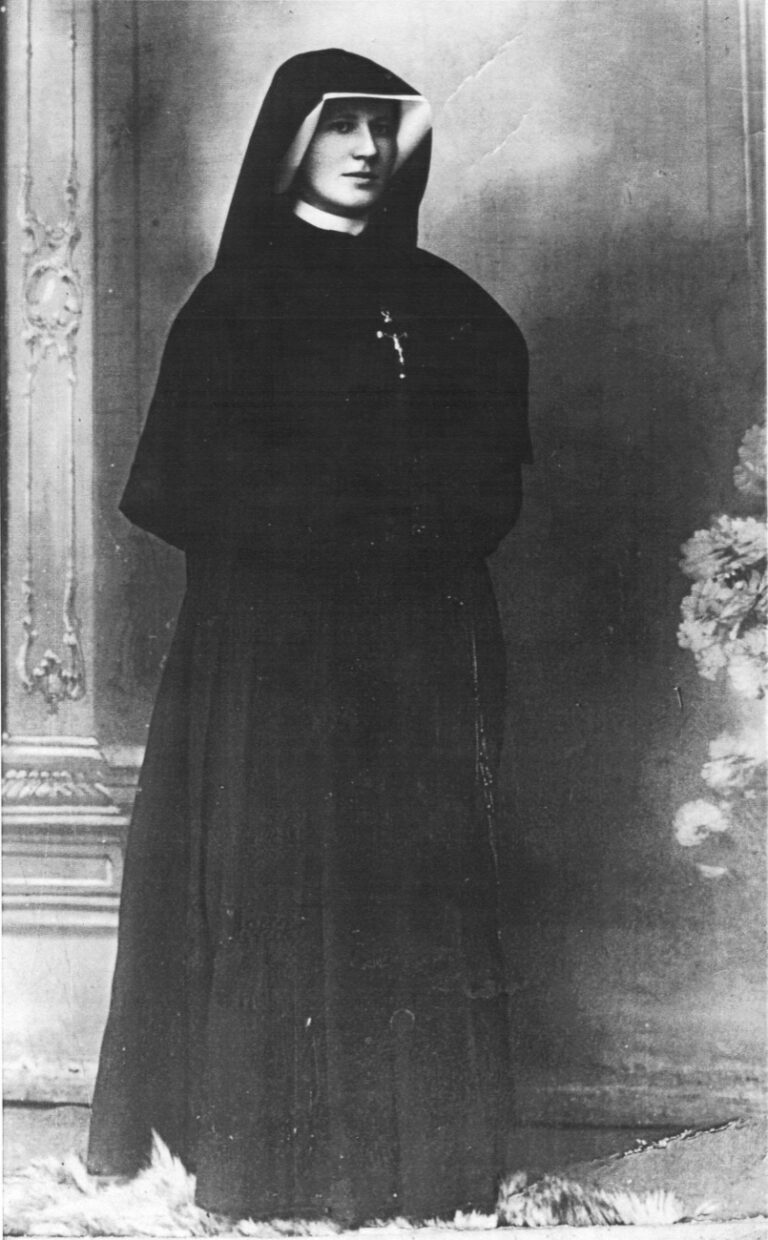
Sister Faustina in Płock, 1931, the year of the vision of the Merciful Jesus. Public domain.
According to her Diary
From 1924 to 1938, Jesus appeared to her many times. These are the most important moments, told in her own words.
1
1924 · Łódź
As a young woman, Helen went to a dance with one of her sisters. In the middle of the music she saw Jesus, racked with pain and covered with wounds. That same night, prostrate before the Blessed Sacrament in the cathedral, she heard: “Go at once to Warsaw; you will enter a convent there,” and she left with only the dress she was wearing.
“How long shall I put up with you and how long will you keep putting Me off?”
Diary 9 and 10
2
February 22, 1931 · Płock
In the evening, in her cell, she saw the Lord clothed in a white garment, one hand raised in blessing and the other touching His breast, from which two large rays came forth: one red and the other pale.
“Paint an image according to the pattern you see, with the signature: Jesus, I trust in You. I desire that this image be venerated, first in your chapel, and [then] throughout the world.”
Diary 47
3
1931 · Płock
In the same revelation, Jesus asked that a feast dedicated to His mercy be celebrated on the Sunday after Easter.
“I desire that there be a Feast of Mercy. I want this image, which you will paint with a brush, to be solemnly blessed on the first Sunday after Easter; that Sunday is to be the Feast of Mercy.”
Diary 49
4
1934 · Vilnius
At the request of her confessor, Blessed Michael Sopoćko, she asked the Lord what the rays in the image meant.
“The two rays denote Blood and Water. The pale ray stands for the Water which makes souls righteous. The red ray stands for the Blood which is the life of souls.”
Diary 299
5
October 26, 1934 · Vilnius
Returning from the garden with the pupils, she saw Jesus above the chapel, just as she had seen Him in Płock. The pale and red rays enveloped the chapel and then spread over the whole world.
Chronology of the Diary
6
April 26-28, 1935 · Vilnius · Gate of Dawn
The image was displayed for public veneration for the first time at Ostra Brama, the “Gate of Dawn” of Vilnius, shrine of the Mother of Mercy, on the first Sunday after Easter. While Father Sopoćko preached on the Divine Mercy, Saint Faustina saw the image come alive.
As he spoke of the great mercy of the Lord, she saw the image come alive and its rays pierce the hearts of the people gathered there.
Diary 89 and 417
7
September 13 and 14, 1935 · Vilnius
Before the vision of an angel sent to punish the earth, she prayed with words she heard interiorly. The next day, in the chapel, Jesus taught her to pray them on ordinary rosary beads.
“Eternal Father, I offer You the Body and Blood, Soul and Divinity of Your dearly beloved Son, Our Lord Jesus Christ, in atonement for our sins and those of the whole world.”
Diary 476
8
Kraków · Łagiewniki
In her last years, Jesus asked her to remember every day the hour of His death on the Cross, at three in the afternoon.
“In this hour you can obtain everything for yourself and for others for the asking; it was the hour of grace for the whole world—mercy triumphed over justice.”
Diary 1572
Vilnius, 1934
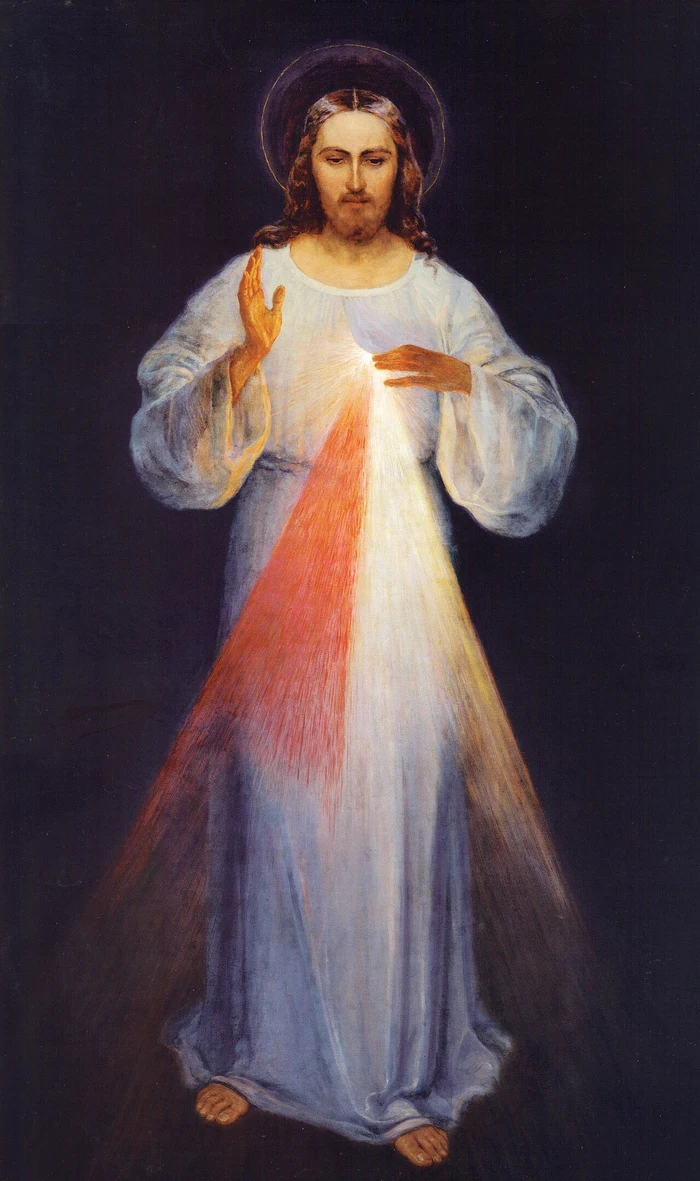
Saint Faustina guided the painter Eugeniusz Kazimirowski step by step in Vilnius, at the request of her confessor. When she saw it finished, in June 1934, she wept because Jesus was not as beautiful as in the vision. “Who will paint You as beautiful as You are?” she asked, and heard: “Not in the beauty of the color, nor of the brush lies the greatness of this image, but in My grace” (Diary 313).
“I am offering people a vessel with which they are to keep coming for graces to the fountain of mercy. That vessel is this image with the signature: ‘Jesus, I trust in You.’” Diary 327
Image: Eugeniusz Kazimirowski, Vilnius, 1934. Public domain.
Saint Maria Faustina Kowalska
Diary
Divine Mercy in My Soul
Free PDF (Spanish)
She wrote it in six notebooks at the order of her spiritual director and at the wish of Jesus. It is the testimony of total trust in God’s mercy and the source of the whole devotion: the image, the Feast, the Chaplet and the Hour of Mercy.
“My daughter, be diligent in writing down every sentence I tell you concerning My mercy, because this is meant for a great number of souls who will profit from it.” — Diary 1142
⬇ Download the Diary (PDF, Spanish)Spanish edition: fourth authorized edition · Marian Fathers of the Immaculate Conception, Stockbridge (Massachusetts), 2001. In English: Diary of Saint Maria Faustina Kowalska: Divine Mercy in My Soul (Marian Press).
What Jesus asked of her
The Merciful Jesus with the signature “Jesus, I trust in You.”
The Second Sunday of Easter, Divine Mercy Sunday.
The prayer Jesus taught her in Vilnius in 1935.
Every day at three in the afternoon, the hour of great mercy.
Jesus, I trust in You